Divinely Queer
A pop-up group exhibition curated BY lora (of queer space philly) & lara Bros
Exhibition Runs June 6th - June 21st
Opening Reception Saturday, June 6th from 5 - 7 PM
Closing Reception & Artist Talk Sunday, June 21st from 12 - 2 PM
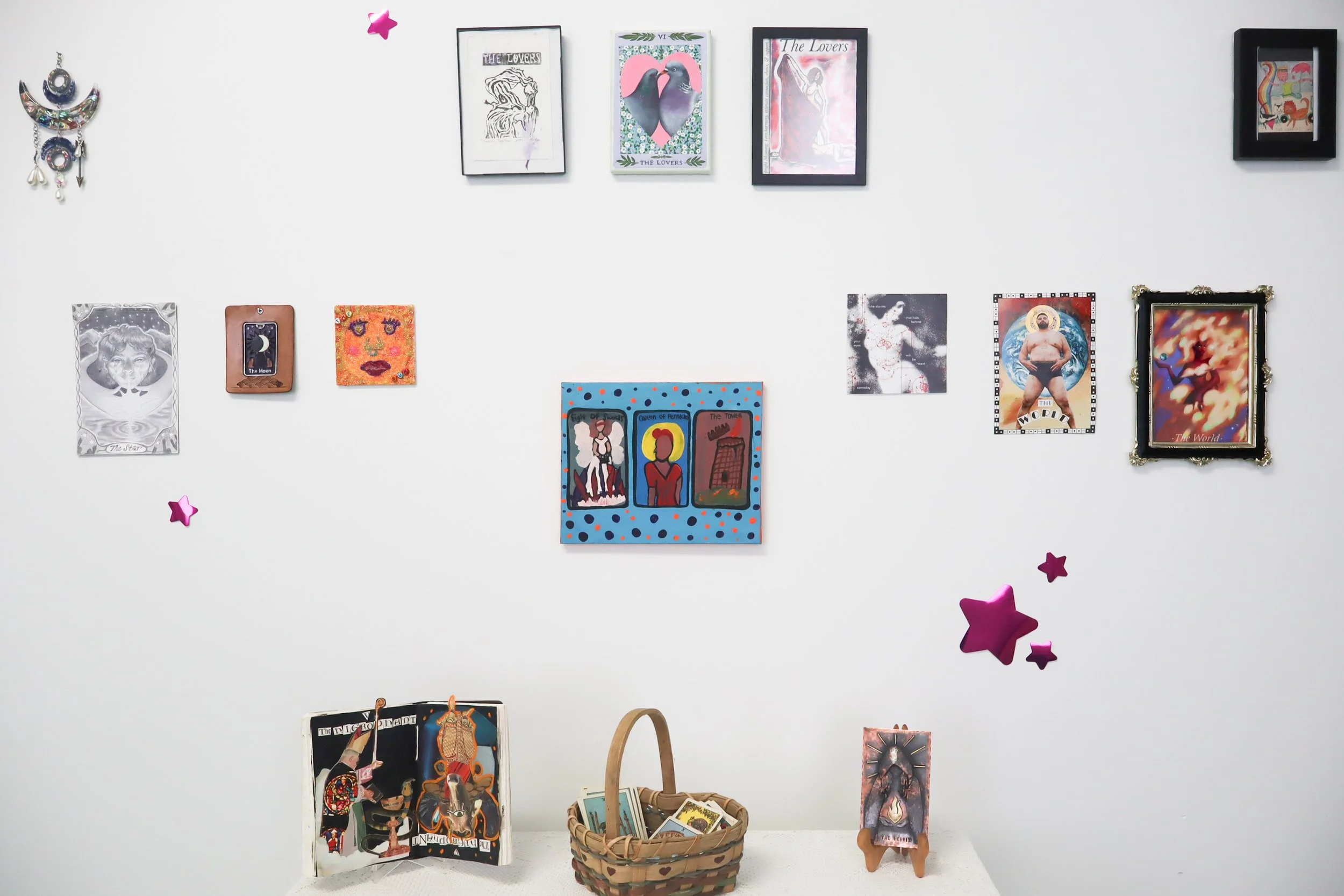
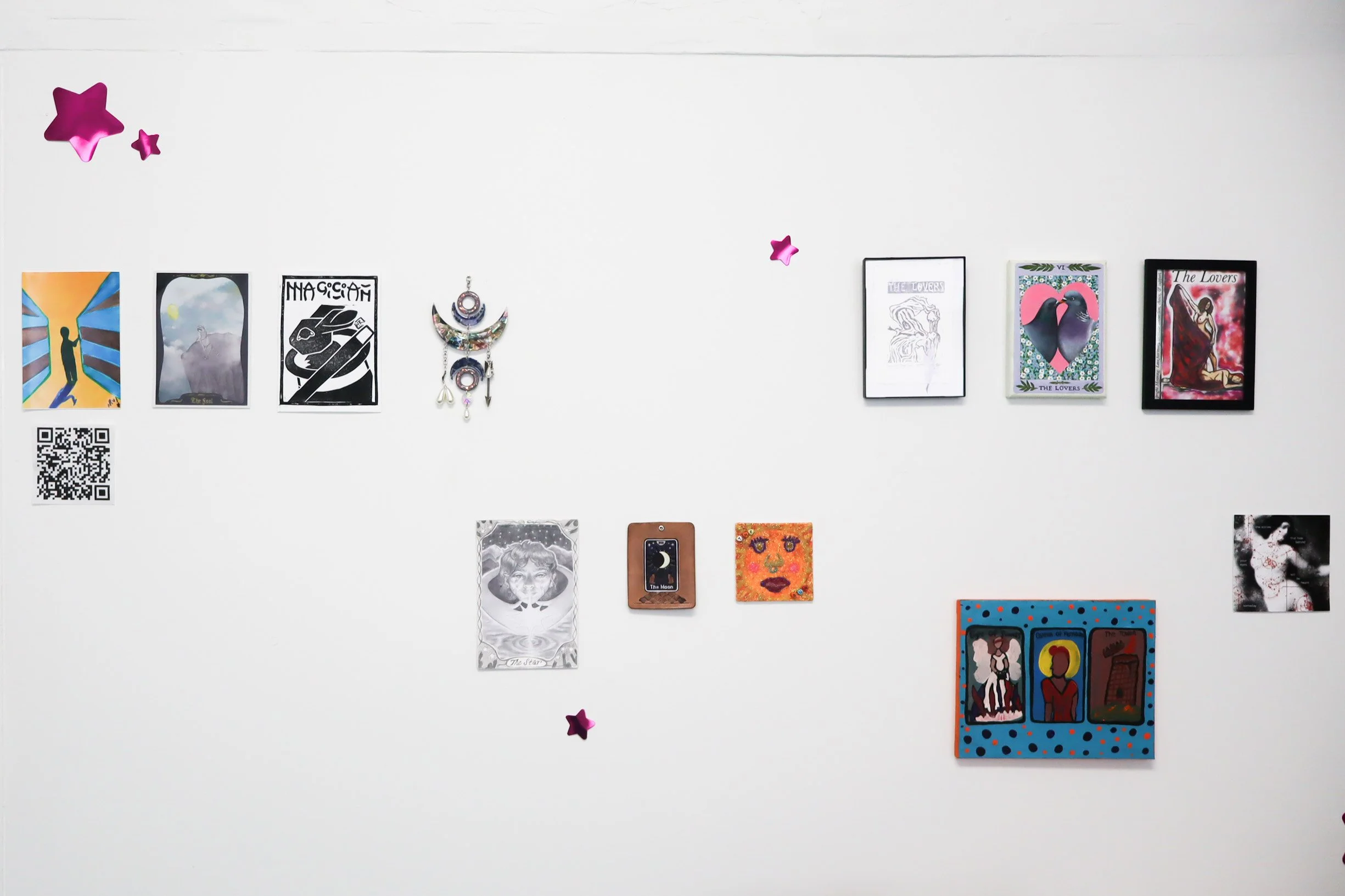
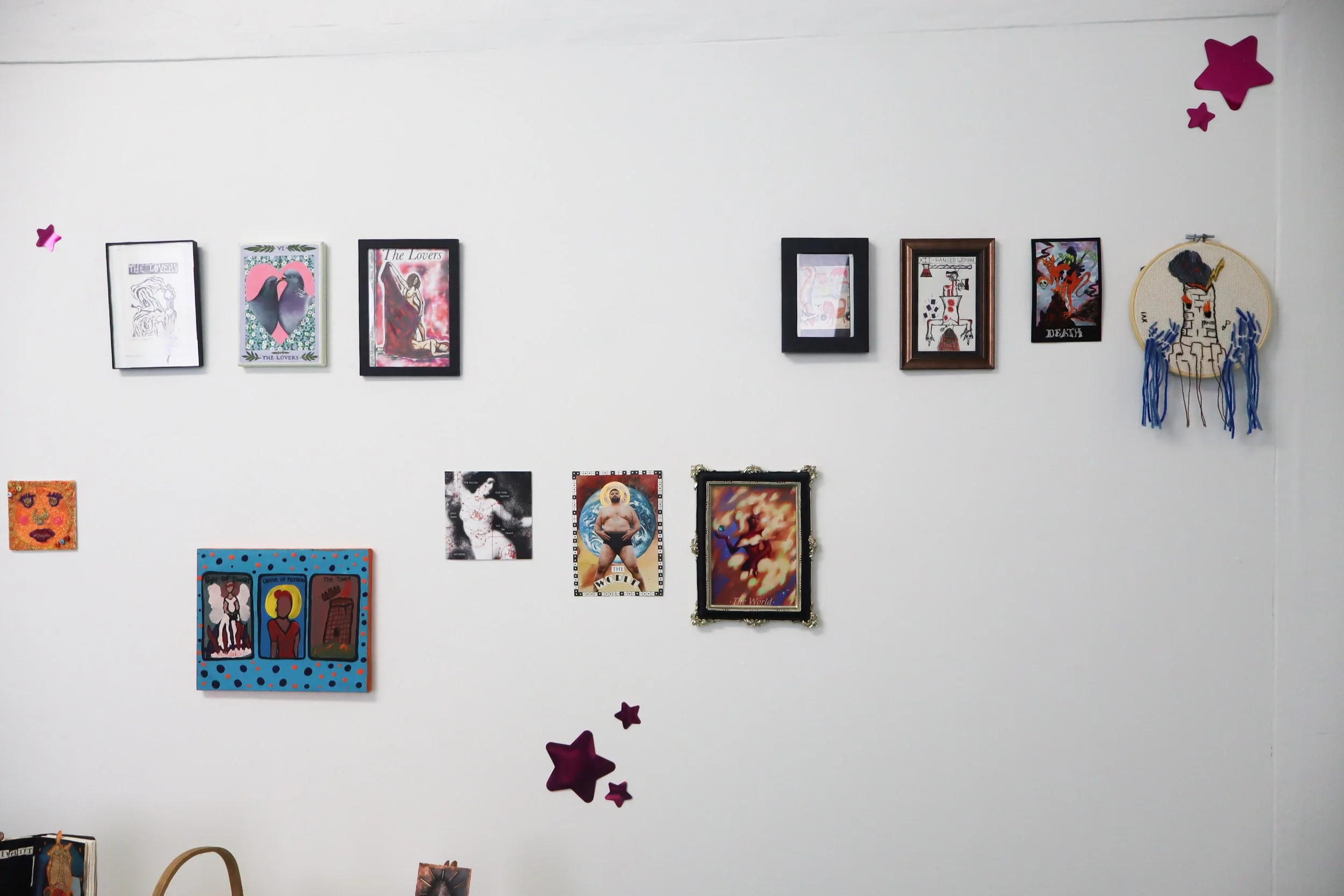
About the exhibition:
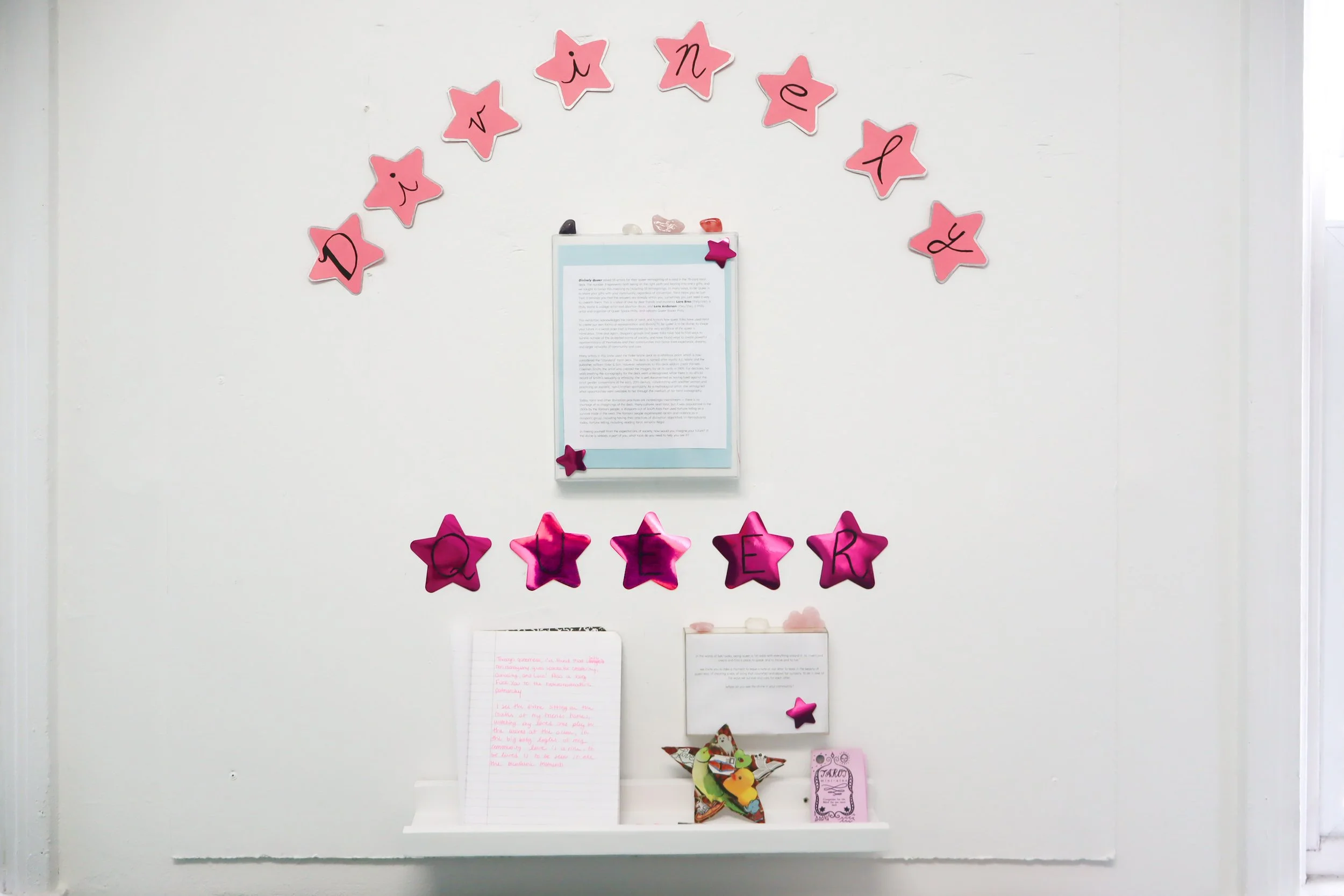
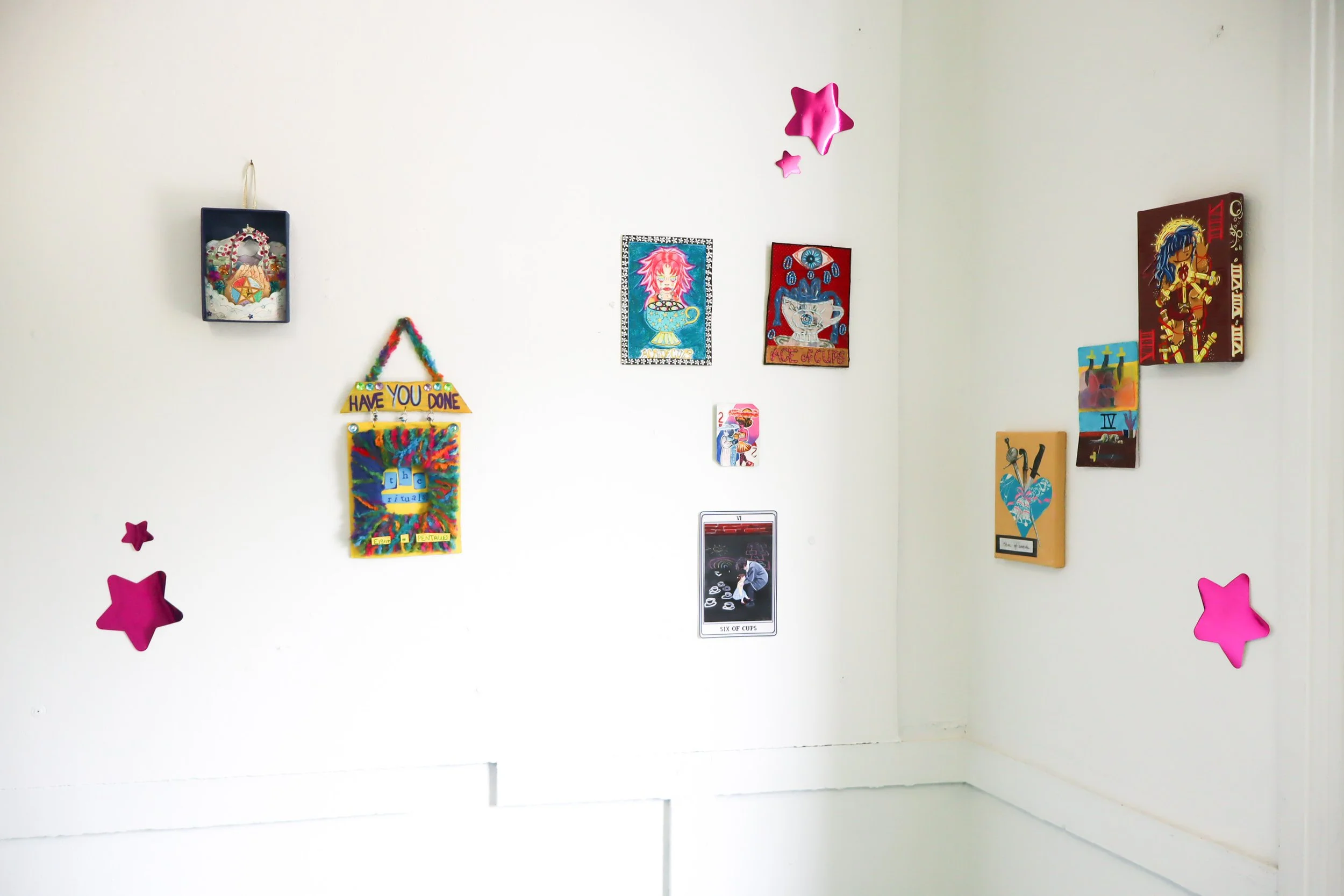
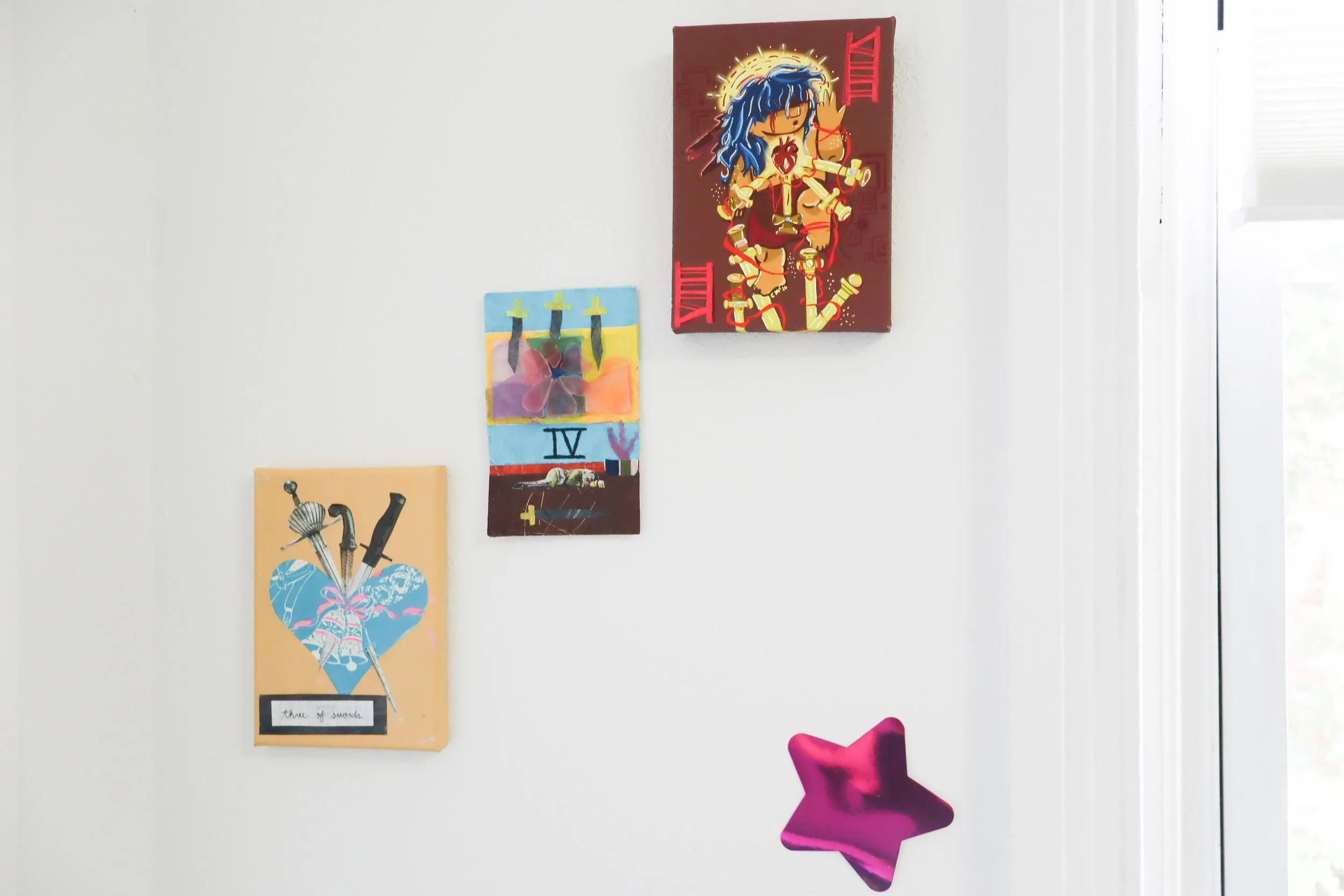
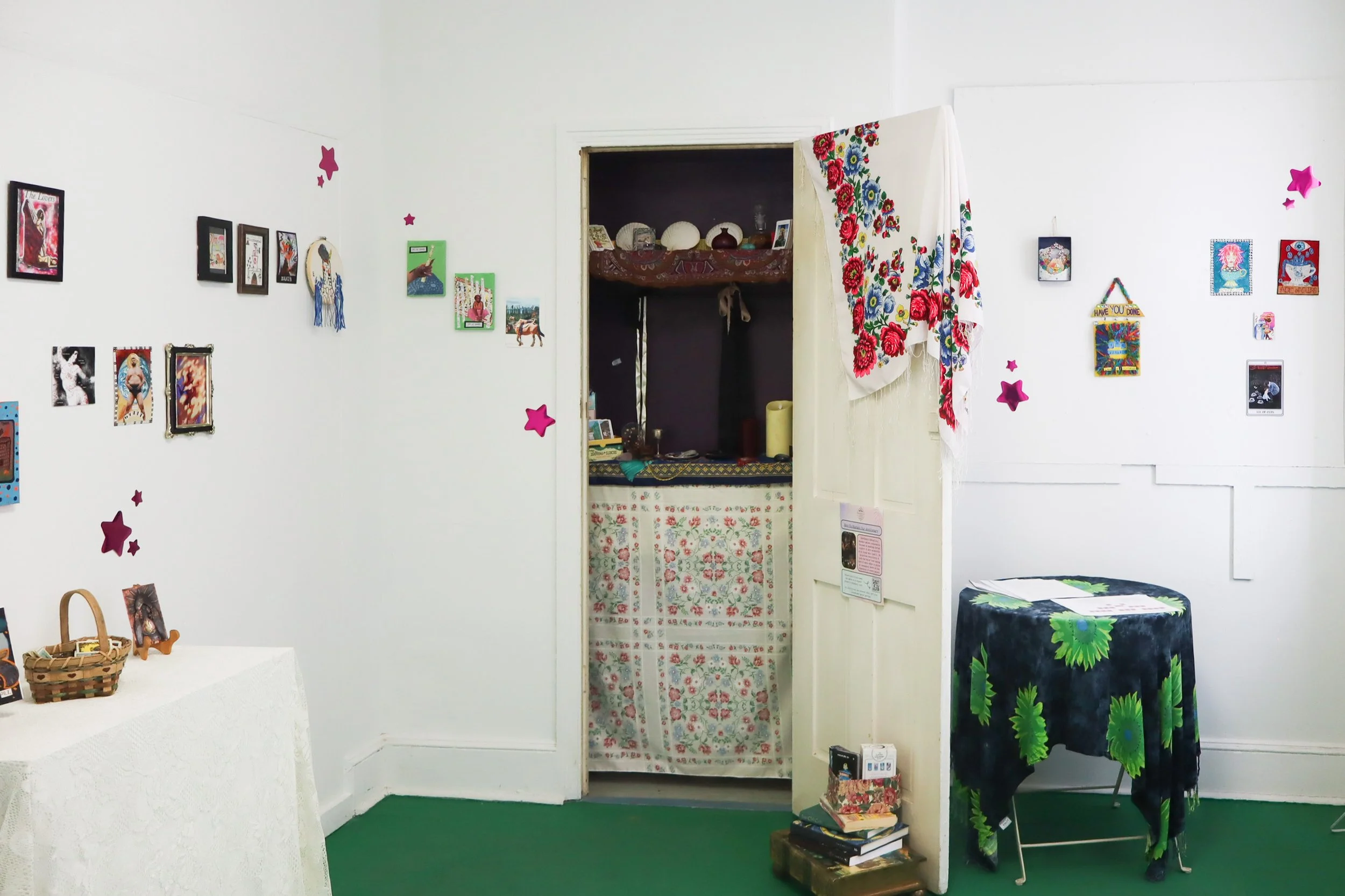
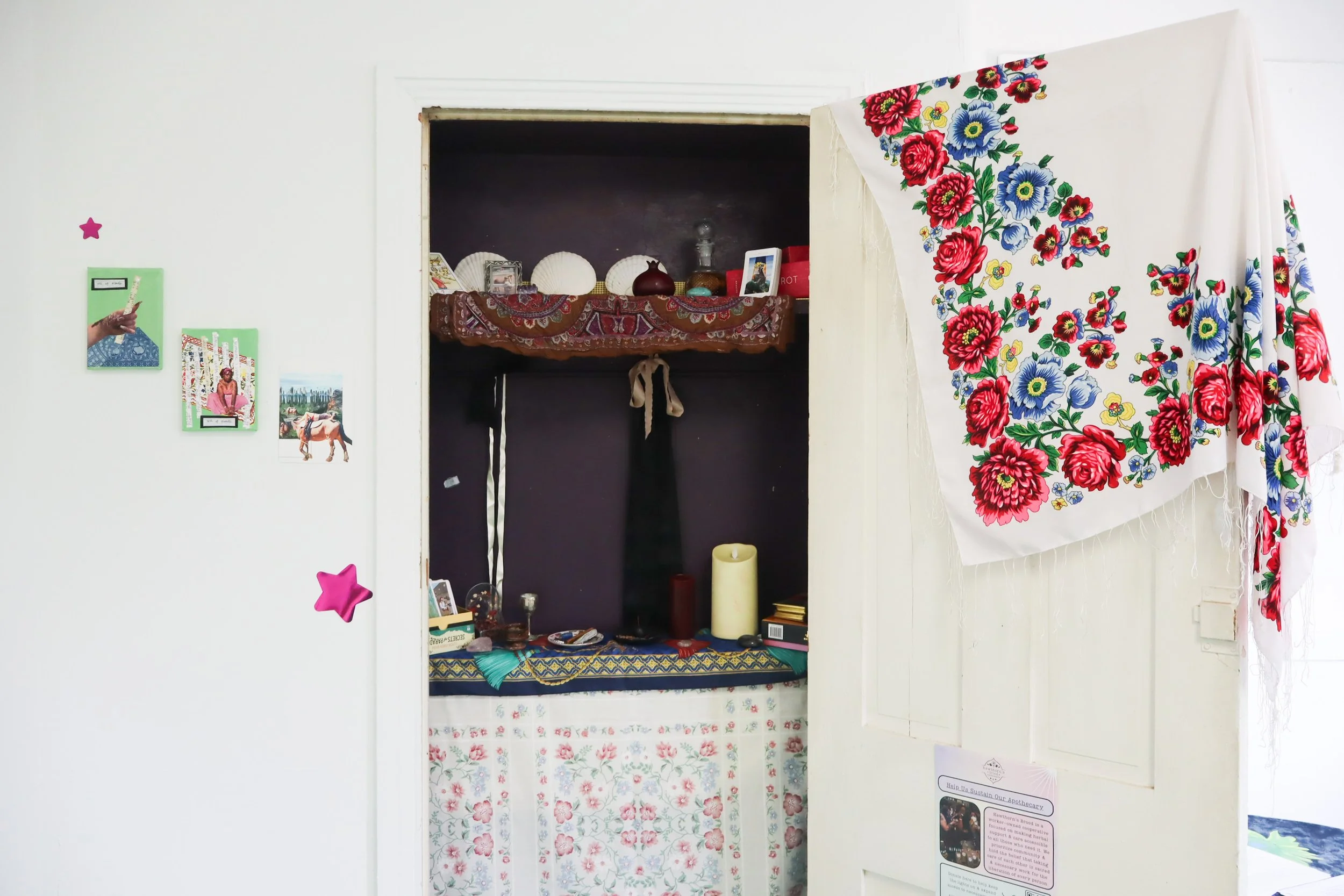
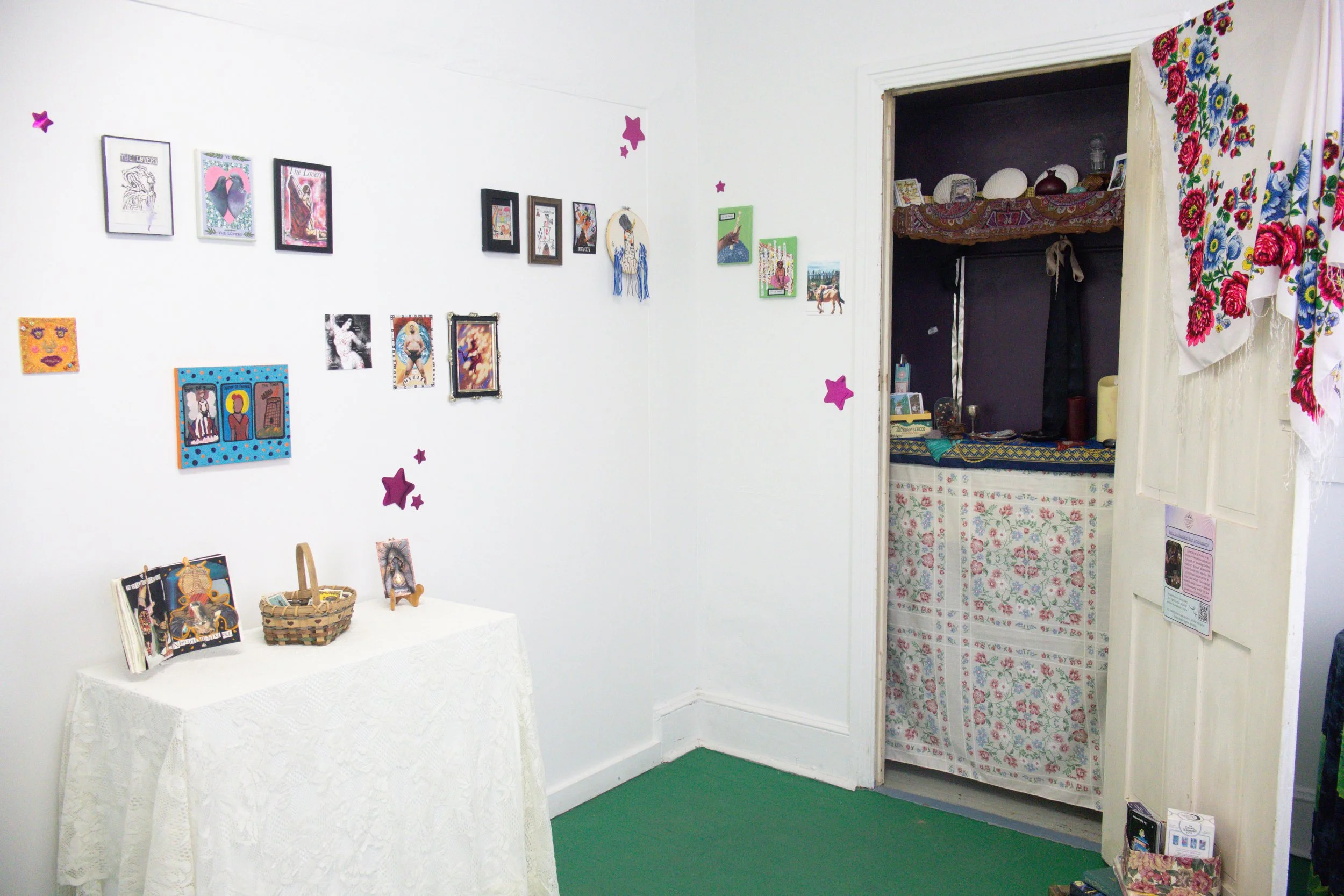
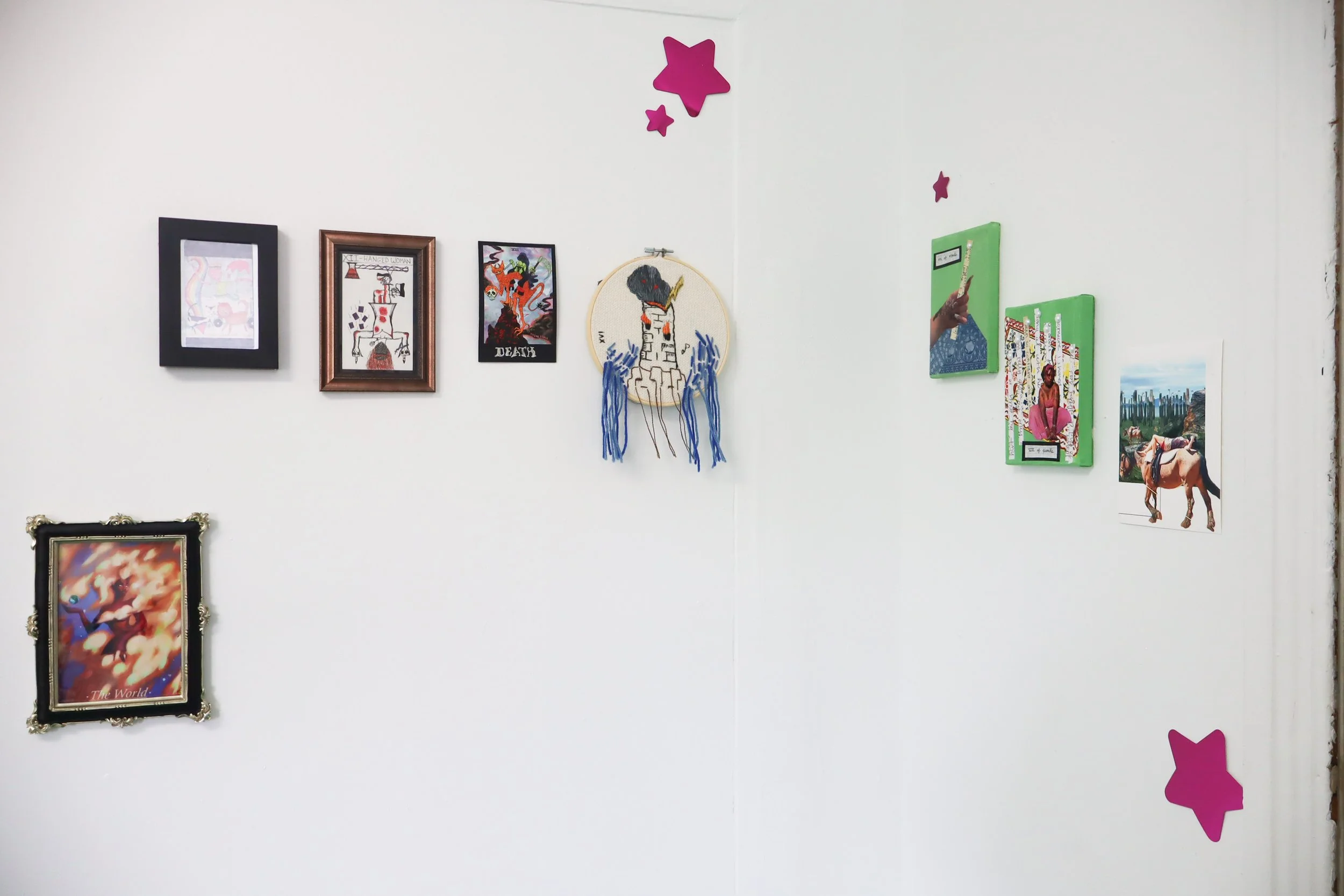
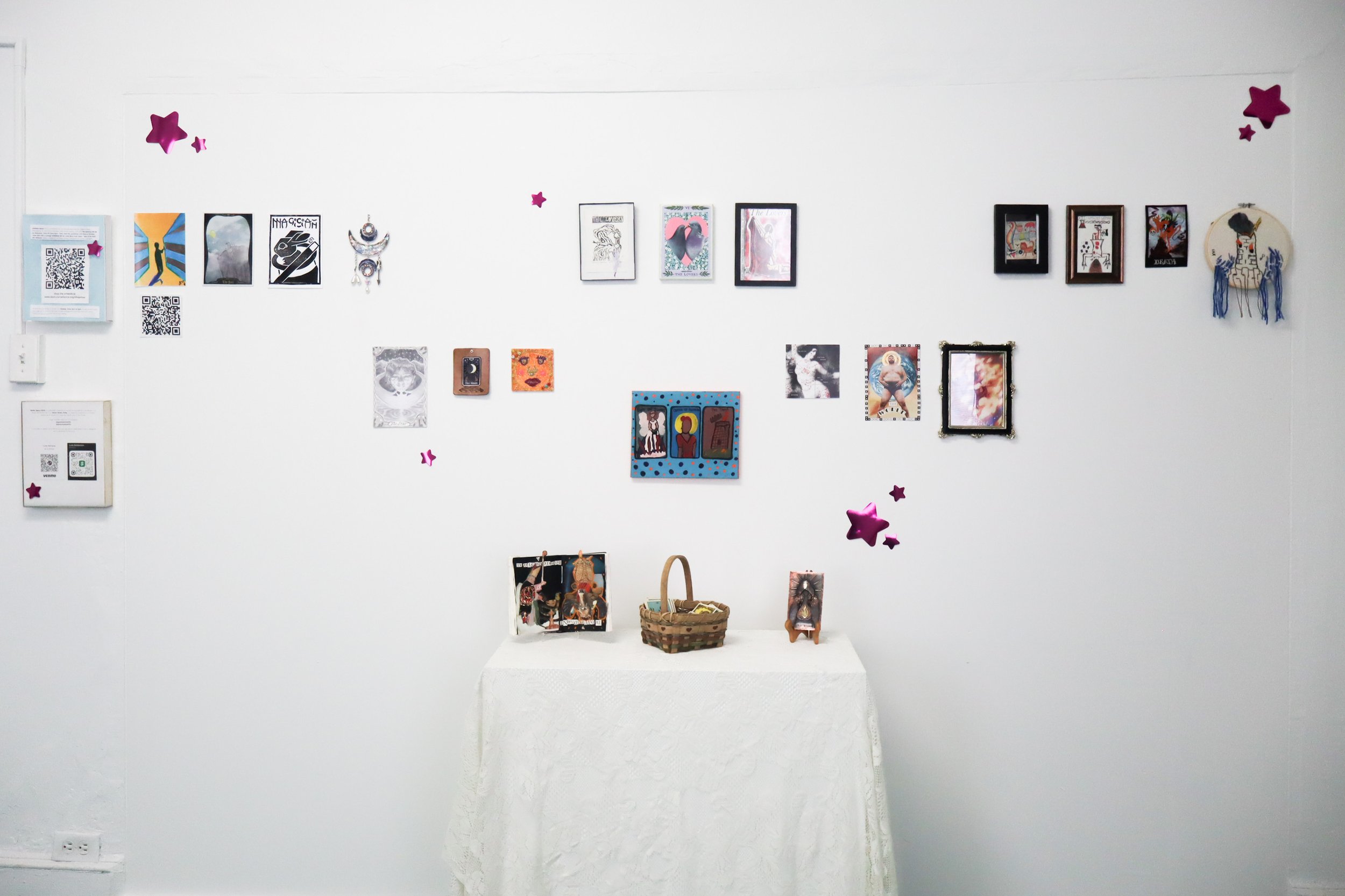
Divinely Queer asked 33 artists for their queer reimagining of a card in the 78-card tarot deck. The number 3 represents both being on the right path and leaning into one’s gifts, and we sought to honor this meaning by including 33 reimaginings. In many ways, to be Queer is to share your gifts with your community, regardless of convention. Tarot helps you do just that; it reminds you that the answers are already within you, sometimes you just need a way to unearth them. This is a labor of love by dear friends and esoterics Lara Bros (they/she), a Philly textile & collage artist and abortion doula, and Lora Anderson (they/she), a Philly artist and organizer of Queer Space Philly, and cohosts Queer Books Philly.
This exhibition acknowledges the roots of tarot, and honors how queer folks have used tarot to create our own forms of representation and divinity. To be queer is to be divine; to shape your future in a world order that is threatened by the very existence of the queer is miraculous. Time and again, diasporic groups and queer folks have had to find ways to survive outside of the accepted norms of society, and have found ways to create powerful representations of themselves and their communities that honor lived experience, dreams, and larger networks of community and care.
Many artists in this show used the Rider-Waite deck as a reference point, which is now considered the “standard” tarot deck. The deck is named after mystic A.E. Waite and the publisher, William Rider & Son. However, references to this deck seldom credit Pamela Coleman Smith, the artist who created the imagery for all 78 cards in 1909. For decades, her work creating the iconography for the deck went unrecognized. While there is no official record of Smith’s sexuality or ethnicity, she is well documented as having lived against the strict gender conventions of the early 20th century, cohabitating with another woman and practicing an esoteric, non-Christian spirituality. As a mythological artist, she reimagined what opportunities were available to her through the medium of her tarot iconography.
Today, tarot and other divination practices are increasingly mainstream — there is no shortage of re-imaginings of the deck. Many cultures read tarot, but it was popularized in the 1300s by the Romani people, a diaspora out of South Asia that used fortune telling as a survival trade in the west. The Romani people experienced racism and violence as a diasporic group, including having their practices of divination objectified. In Pennsylvania today, fortune telling, including reading tarot, remains illegal.
In freeing yourself from the expectations of society, how would you imagine your future? If the divine is already a part of you, what tools do you need to help you see it?
The exhibition will be on view in Gallery 3 at Da Vinci Art Alliance from June 6th to June 21st. To pair with the show, there will be tarot card readings during the opening reception on June 6th from 5—7pm and a tarot-making workshop on Sunday, June 21st from 12—2pm.
Featured Artists:
Alex Jaouiche, Angel Hearings, Ash Bayer, Ashley Kelly, Ava Haitz, Caillete Rose, Char Gray, Courtney McGrorty, Erin May, Bailey Estelle, Hana-Evelyn, Hayden Rogers, JB Moore, Jessica Eskow, Jude Marr, Jymi Cliche, Kate Cooper, Lara Bros, Liz Nolan, Lora Anderson, Madeline Shuron, Meredith Clark, Nicole Gooding, Nivi Canela, Rosemary Carroll, Stephanie McGady, Thyme Spaceae, Tyneisha Bowens, Victoria Acosta, Violet Pierce, Zee Y